In Spain, excise duties on spirits and VAT applied to alcoholic beverages remain significantly lower than those in France. This difference in taxation forms the basis of the price gap observed between the two countries. However, this gap, long considered a given by cross-border buyers, varies according to the type of alcohol, the place of purchase, and the emergence of new distribution channels.
Comparative Taxation: Why Alcohol is Cheaper in Spain
The explanation lies in two mechanisms. The first concerns excise duties on spirits, set at a lower level in Spain than in France. The second relates to VAT: the general Spanish rate is lower than the French rate, and this difference is directly reflected in shelf prices.
On a bottle of whisky or rum sold in a supermarket, these two combined levers can represent a significant gap per liter. For wines and beers, the mechanism remains the same, but the effect is much less noticeable as excise amounts are low in both countries.
Recent comparisons show that if we look at the price of alcohol in Spain in 2026, the tax advantage remains real for common spirits, but it becomes marginal for wine and supermarket beer.
Jonquera, Le Perthus, Traditional Supermarkets: Price Differences by Place of Purchase
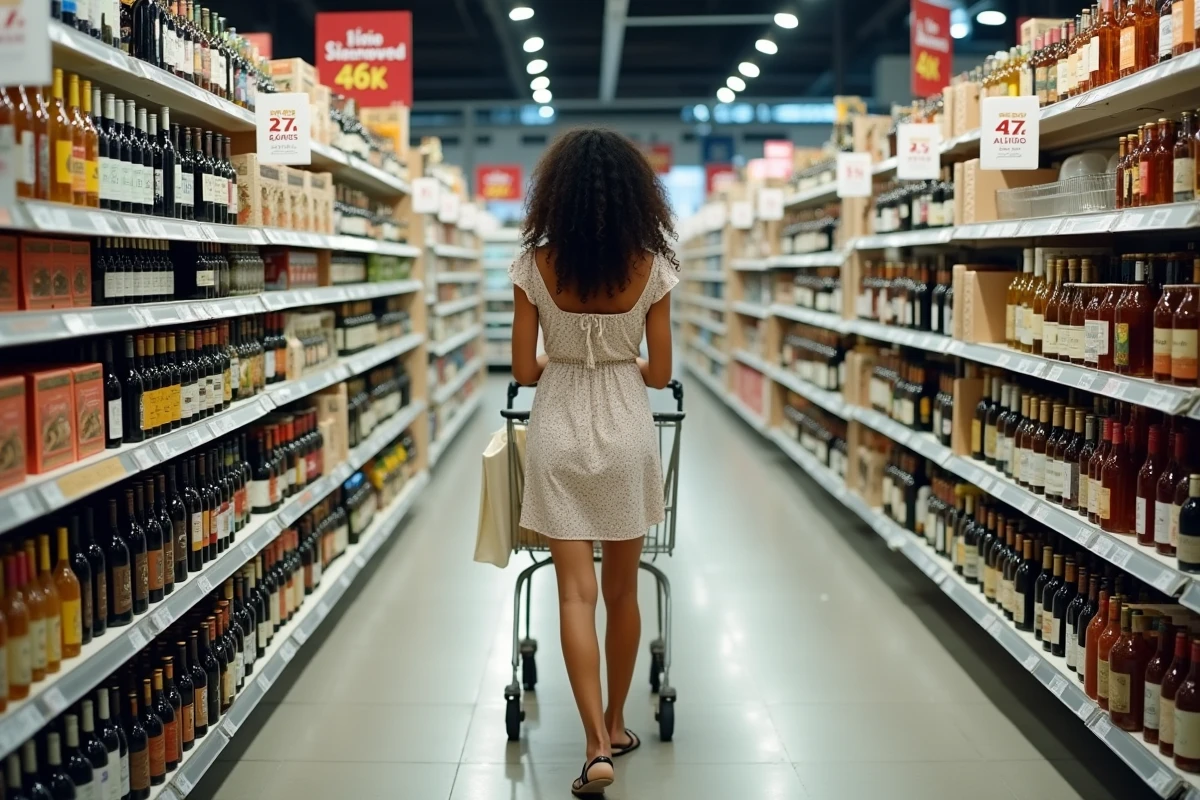
Crossing the border is no longer enough to guarantee the best deal. The place of purchase in Spain weighs as much as the border crossing itself. Generalist guides treat Spain as a homogeneous block, while prices vary greatly from one point of sale to another.
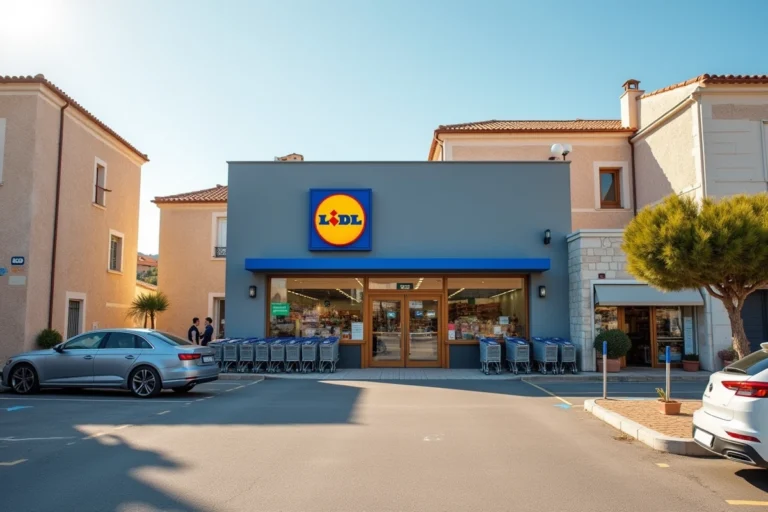
Jonquera remains the iconic destination for southern French shoppers. Its large shopping centers and border bazaars offer whiskies, vodkas, and rums at attractive prices, often accompanied by promotions on bulk purchases. Le Perthus, smaller in size, sometimes offers slightly different prices on the same references.
Factors Influencing Price Variations Between Two Border Cities
Several factors explain these discrepancies:
- The commercial positioning of the store: a traditional supermarket (Mercadona, Bonàrea) applies its national pricing grids, while a border bazaar adjusts its prices to the French tourist demand.
- Seasonal promotions: certain blended spirits or large-format bottles are subject to occasional discounts, especially during the summer period.
- The purchase format: standard 70 cl bottles do not offer the same value for money as one-liter formats or multi-bottle packs.
For international brands of whisky or vodka, the gap between Jonquera and a French hypermarket has narrowed in recent years. The advantage is no longer systematic or spectacular across all references. However, for entry-level spirits or local products like sherry, the differential remains notable.
Online Sale of Spanish Alcohol: A Channel That Changes the Calculation
The rise of Spanish online alcohol sales platforms introduces a variable that articles focused on cross-border shopping ignore. Sites like Grauonline or Decántalo offer spirits starting at around ten euros for a 70 cl bottle, with delivery in France.
For a buyer living far from the border, ordering online eliminates the cost of travel (fuel, tolls, time). The economic calculation changes entirely: the savings on the bottle price must be weighed against shipping costs, rather than several hundred kilometers by car.
Limitations of Online Ordering
This channel remains regulated. The quantities ordered for personal use must comply with the thresholds set by French customs. European regulations allow the transport of alcohol between member states without additional duties, but under certain volume conditions.
For spirits, the indicative threshold set by French customs is 10 liters per person. Beyond this, one must be able to justify personal use. This ceiling applies equally, whether the bottles are transported by car or delivered by a Spanish site.
Quantities Allowed by French Customs: Thresholds to Know
Customs rules directly affect the profitability of a purchase in Spain. Here are the indicative thresholds for personal use between EU countries:
- Spirits (whisky, vodka, rum, gin): 10 liters per person.
- Wines: 90 liters, of which a maximum of 60 liters may be sparkling wine.
- Beers: 110 liters.
These volumes correspond to the quantities beyond which customs may presume commercial use and request justifications. Below this, no additional tax is required.
A detail often overlooked: these thresholds apply per adult present in the vehicle. A couple can therefore transport double the indicated volumes without difficulty, provided that each can justify their purchases.
Conclusion: For Which Alcohols is Traveling Still Worth It in 2026
Buying alcohol in Spain still has a clear financial interest for common spirits purchased in bulk, especially in border areas where competition among retailers keeps prices low. Entry-level and mid-range whisky, rum, and vodka remain the categories where the gap with France justifies the trip.
For supermarket wine and beer, the gain has become too small to cover the costs of a trip from most French cities. Local Spanish products (sherry, bulk wine casks) maintain a value-for-money ratio that is hard to find in France, but their market remains niche.
The real change in 2026 lies in the diversification of channels. Between Spanish online sales sites and targeted promotions from border retailers, the savvy buyer now compares three options (French supermarket, border store, online order) before hitting the road.