
In a fascinating exploration through the centuries, let us travel back to the origins of our written communication. In an era when humanity was identified only by cave drawings and marks on clay, the first writing systems began to emerge, laying the foundations for the alphabet we know today. These primitive transcription formulas, which arose in ancient civilizations such as Mesopotamia and Egypt, revolutionized the way our ancestors interacted and transmitted their knowledge, paving the way for the development of humanity. A focus on these early writing systems opens a window into our rich and complex past.
Writing: a powerful means of communication
The emergence of written communication is a fascinating and complex chapter in the grand book of our history. Nowadays, when we think of writing, we often perceive it through the familiar prism of the number of letters in the French alphabet, which totals 26. The path to arrive at this standardized number has been winding and marked by key milestones.
The first writing systems were far from the alphabetical concept we know today. These pictographic scripts were based on representative drawings: for example, an image of an animal to signify that particular animal. This method was certainly effective for simple messages, but it did not allow for the transmission of subtle nuances or complex ideas.
The growing need for more precise communication among rapidly developing societies led to technological innovations in cuneiform and hieroglyphic writing. Their combinatorial approaches allowed for much more nuanced expression through several hundred or even thousands of different symbols.
This profusion also created its share of obstacles, particularly the massive memorization required to read and write fluently in these ancient languages. This is where the Phoenicians came into play with their revolutionary contribution: a system consisting solely of 22 consonants!
This drastic transformation towards relative simplicity was, however, not without limitations, mainly because it lacked vowels. It was then that the Greeks adopted this Phoenician system and added letters to represent vowel sounds, thus creating the first true alphabet as we understand it today.
From this decisive step to our current French alphabet with its specific number of 26 letters, several other key milestones had to be crossed: the adoption by the Romans who modified this Greek alphabet to create their own Latin version; then its spread across Europe during the Roman colonization period. French, like many other modern Romance languages, directly inherited from the Latin model.
Let us always remember that each letter in our language reveals a deep story—a living testament of our ancestors seeking to understand and communicate with the world around them.
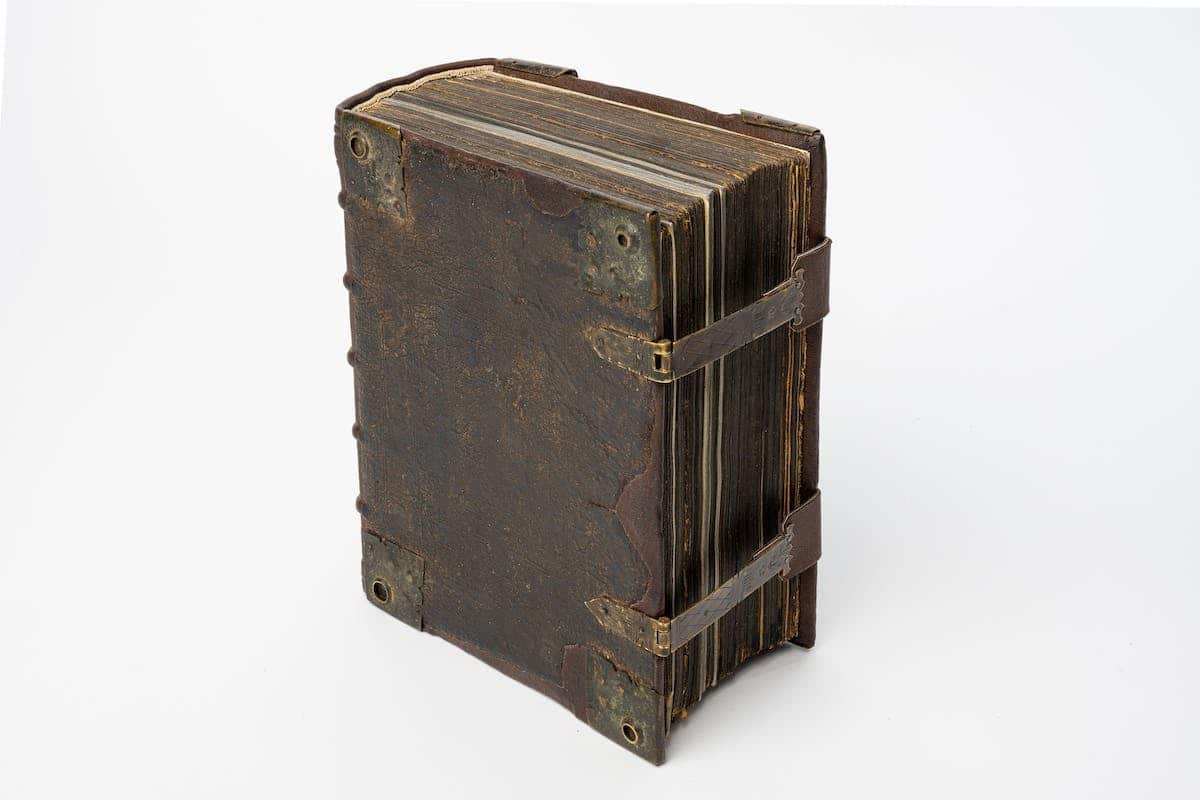
From images to words: the evolution of early writing systems
The beginnings of writing date back thousands of years when our ancestors began to engrave images on cave walls to tell their stories and convey information. These early pictographic forms were rudimentary but effective, allowing for the representation of specific objects and events.
Over time, these writing systems evolved to incorporate more symbols representing a wider range of abstract concepts. Ancient civilizations such as the Sumerians in Mesopotamia and the Egyptians in the Nile Valley developed their own cuneiform and hieroglyphic systems, respectively.
The cuneiform system used wedge-shaped signs carved into wet clay with a pointed stylus, giving rise to a complex set composed of thousands of different characters. Each character could take on different meanings depending on the context. This sophisticated system was essential in the development of trade, as it allowed peoples to record commercial transactions as well as the laws and ordinances that governed their society.
Similarly, the Egyptian civilization developed a complex writing system based on hieroglyphs. These richly detailed pictorial symbols represented not only physical objects but also abstract ideas such as the sun or knowledge. Reading and understanding this alphabet requires a deep knowledge of the many existing hieroglyphs, which limited its accessibility to a restricted elite.
It was during the second millennium BCE that the Phoenicians introduced their own simplified writing system. Their alphabet consisted of only 22 consonants, allowing for faster and easier reading and writing. Thanks to their strategic geographical position as maritime traders, the Phoenicians spread this alphabet throughout the Mediterranean basin.
The Greeks then adopted the Phoenician alphabet but with a major innovation: they added vowels to represent all the sounds of the Greek language. This new alphabet was widely adopted by other Hellenistic civilizations and is considered the true starting point of the modern Western alphabet.
Over the centuries, this alphabet spread throughout Europe due to Roman conquests. The Romans adapted the Greek alphabet to their specific linguistic needs, and thus the Latin alphabet was born. This is the direct source of our current French alphabet.
The early written systems were essential for enabling ancient societies to communicate effectively. As civilizations evolved, these systems became more complex until they reached a point where simplification was necessary to make them accessible to as many people as possible. The gradual evolution towards a simpler and more efficient alphabet demonstrates the perseverance and ingenuity of our ancestors in their quest to communicate and preserve their knowledge.
Cuneiform and hieroglyphs: the writings that marked history
Throughout history, several civilizations have contributed to the evolution of writing systems. Among them are the Sumerians, who lived in Mesopotamia over 5,000 years ago.
The Sumerians are considered the inventors of the cuneiform system, a complex writing composed of wedge-shaped signs carved on clay tablets. This system was used for accounting, recording commercial exchanges, and even composing religious hymns. Sumerian scribes were highly skilled and played a crucial role in society.
Alongside the Sumerians, the Egyptians were developing their own writing system: hieroglyphs. These complex symbols were engraved on papyrus or inscribed in stone to preserve their knowledge and history. This writing was reserved for a literate elite, such as priests and royal scribes.
Over time, these systems proved impractical for representing all the linguistic subtleties necessary for effective communication. This is how Phoenician emerged as a simplified alphabet around the second millennium BCE.
The Phoenician alphabet consisted solely of consonants and allowed for faster and easier reading than its complex predecessors. Thanks to the Phoenicians, active maritime traders around the Mediterranean basin, this alphabet was adopted and adapted by various peoples. The Greeks added vowels to better suit their own language, thus giving birth to the Greek alphabet.
The Greek alphabet was then adopted by the Romans, who made their own modifications to meet the specific needs of the Latin language. This is how the Latin alphabet was born, which is still used today in many Western languages.
The constant evolution of writing systems reflects our incessant desire to communicate effectively and record our knowledge. Simple images engraved on rock walls thousands of years ago gradually became a sophisticated system allowing for the complex transmission of abstract ideas.
Today, we still use these same main writing systems inherited from the past. The Latin alphabet plays an essential role in our globalized society, while Sumerian cuneiform and Egyptian hieroglyphs continue to fascinate researchers and reveal the mysteries of the past.
The evolution towards cuneiform and hieroglyphic writing systems marks an important milestone in the history of human literacy. These complex systems paved the way for written communication as we know it today, while preserving the precious cultural heritage of ancient civilizations.
How writing shaped ancient civilizations
Writing systems played a crucial role in the development of ancient civilizations. They allowed for the preservation of knowledge and history, thus facilitating the transmission of knowledge from one generation to the next. But beyond this documentary function, these systems also had a profound influence on the social, economic, and cultural development of civilizations.
The emergence of writing systems fostered the development of formidable urban centers. The Sumerians, for example, used their cuneiform system to maintain complex records related to trade and bureaucracy. This rigorous organization was essential for effectively managing rapidly expanding cities. Similarly, Egyptian hieroglyphs were used to record commercial transactions and land ownership.
These written systems are closely linked to the technological advancements of each era.
The Phoenician alphabet: a legacy that transformed modern languages
Within the rich history of writing systems, the Phoenician alphabet holds a prominent place. The Phoenicians, famous sailors and traders of antiquity, played a crucial role in spreading this alphabet throughout the Mediterranean world.
The Phoenician alphabet consisted of a limited set of characters representing consonantal sounds. Unlike previous systems that used ideograms or complex syllabaries to represent words, the Phoenician alphabet was simpler and more efficient. This simplicity allowed for its rapid spread among neighboring populations.
Through their extensive trade network, the Phoenicians spread their alphabet to various peoples and regions. Among them were the Greeks, who were influenced by this writing when they came into contact with the Phoenicians in the 8th century BCE. The Greeks then adapted this alphabet to their specific linguistic needs by adding vowels.
New archaeological discoveries: unprecedented insights into the origin of the alphabet
Recent archaeological discoveries have shed new light on the origins of the alphabet and opened fascinating perspectives for understanding its development. A major discovery was made in the Sinai region of Egypt, where inscriptions dating back to around 1800 BCE revealed a proto-alphabetic writing system.
This ancient writing system was based on Egyptian hieroglyphs but with a more simplified structure. Researchers believe that this proto-alphabetic alphabet may have served as a link between the cuneiform and hieratic systems used at that time.
Another important discovery took place in the Indus Valley, Pakistan, where seals bearing inscriptions dating back to around 2600-1900 BCE were found. These inscriptions indicate that the people of the Indus civilization also used a sophisticated writing system that remains to be deciphered today.
This suggests that several writing systems were already present around the world long before the Phoenician alphabet was developed. It should be noted that these early systems were primarily ideographic or syllabic, unlike the alphabet, which is phonetically based.
Comparative study between these different ancient writings allows researchers to gain a better understanding of the linguistic and cultural relationships between the various civilizations of antiquity.
Recent advances in genomic research have also shed new light on the origins of the alphabet. Studies have shown that the development of alphabetic writing may be linked to genetic changes that promote the development of language and cognition in humans.
This suggests that the emergence of complex writing systems such as the alphabet would not only be the result of a cultural process but also of biological evolution.
Thanks to archaeological discoveries and advances in various scientific fields, our understanding of the origins and development of the alphabet continues to enrich. This exciting quest allows us not only to learn more about our ancestors and their mode of communication but also to gain a new perspective on our own daily use of the letters that make up this alphabet so essential to our modern society.