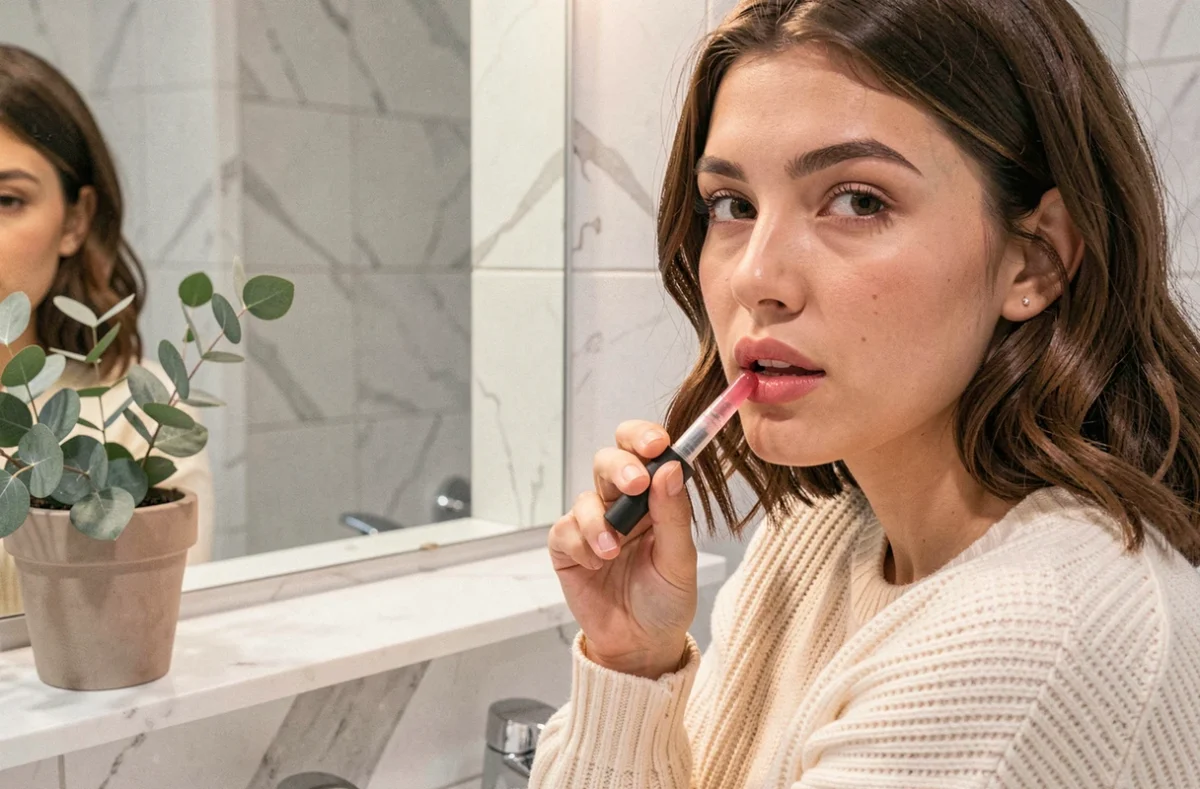
Gloss is making a comeback in makeup bags with a regularity that goes beyond mere trend. A finishing product for the lips, it occupies a niche between pigmented lipstick and lip balm. Its daily use raises concrete questions: skin tolerance, formula composition, actual wear throughout the day. Before incorporating it into a routine, several points deserve close examination.
Contact Cheilitis and Gloss: How Skin Tolerance Changes Daily
A gloss applied every morning comes into prolonged contact with a fine and permeable mucous membrane. The lips have neither sebaceous glands nor a thick stratum corneum, making them more reactive to topical ingredients than the rest of the face.
Cases of contact cheilitis related to lip products are documented in dermatology. Fragrances, flavors, propolis, certain UV filters, or castor oil are among the substances associated with irritations or allergies. A shiny product is not necessarily better tolerated than a neutral balm.
For daily use, reading the INCI list becomes a useful reflex. Short formulas, without added fragrance, reduce the risk of reaction. Those containing synthesized flavors or propolis are more likely to cause problems for individuals with atopic backgrounds. If your lips peel or tingle after application, the product itself may be the cause, not the ambient dryness.
To better understand the reasons for wearing gloss according to Touche de Beauté, it is interesting to cross-reference these elements with the actual aesthetic benefits of the product.
PFAS and Microplastics in Gloss Formulas: A Regulatory Framework in Motion
The characteristic shine of gloss relies on film-forming agents and polymers that create a mirror effect on the lips. Among these agents, per- and polyfluoroalkyl substances (PFAS) may be used to enhance water resistance, glide, or the formation of a long-lasting film.
The European framework is evolving on this subject. Targeted restrictions on microplastics in cosmetics are planned under REACH. Makeup products, including those intended for lips, benefit from a transitional period lasting until October 2035 to reformulate. This long timeframe is explained by the technical difficulty of replacing these components without losing the properties sought by consumers.
In practice, this means that formulas currently on sale may still contain microplastics or PFAS without violating regulations. Brands claiming “clean” or “microplastic-free” formulas are positioning themselves ahead of the regulatory timeline, but no harmonized certification validates these claims at the European level.
Criteria to Check on a Gloss Label
- Absence of terms like “polyethylene,” “acrylates copolymer,” or “polypropylene” in the INCI list, which signal the presence of microplastics
- Explicit mention of “PFAS-free,” keeping in mind that this claim remains voluntary and not governed by an official label
- Fragrance-free or aroma-free formula for reactive skin, identifiable by the absence of “fragrance” or “aroma” in the last ingredients
Transparent or Tinted Gloss: What Type of Formula for Daily Use
The choice between a transparent gloss and a tinted gloss is not solely based on aesthetic preference. The two categories differ in their composition and behavior on the lips over time.
A transparent gloss works as a top coat: it adds shine without altering the natural color of the lips. When applied alone, it gives a subtle “wet lips” effect. Layered over lipstick, it revives the shine of a matte shade. Its formula generally contains fewer pigments and oxides, which reduces the likelihood of allergic reactions to colorants.
The tinted gloss, on the other hand, combines shine and color. The pigments used (iron oxides, carmine, synthetic dyes) increase the number of ingredients likely to cause sensitivity. Carmine, derived from cochineal, remains a recognized contact allergen, although reactions are rare.
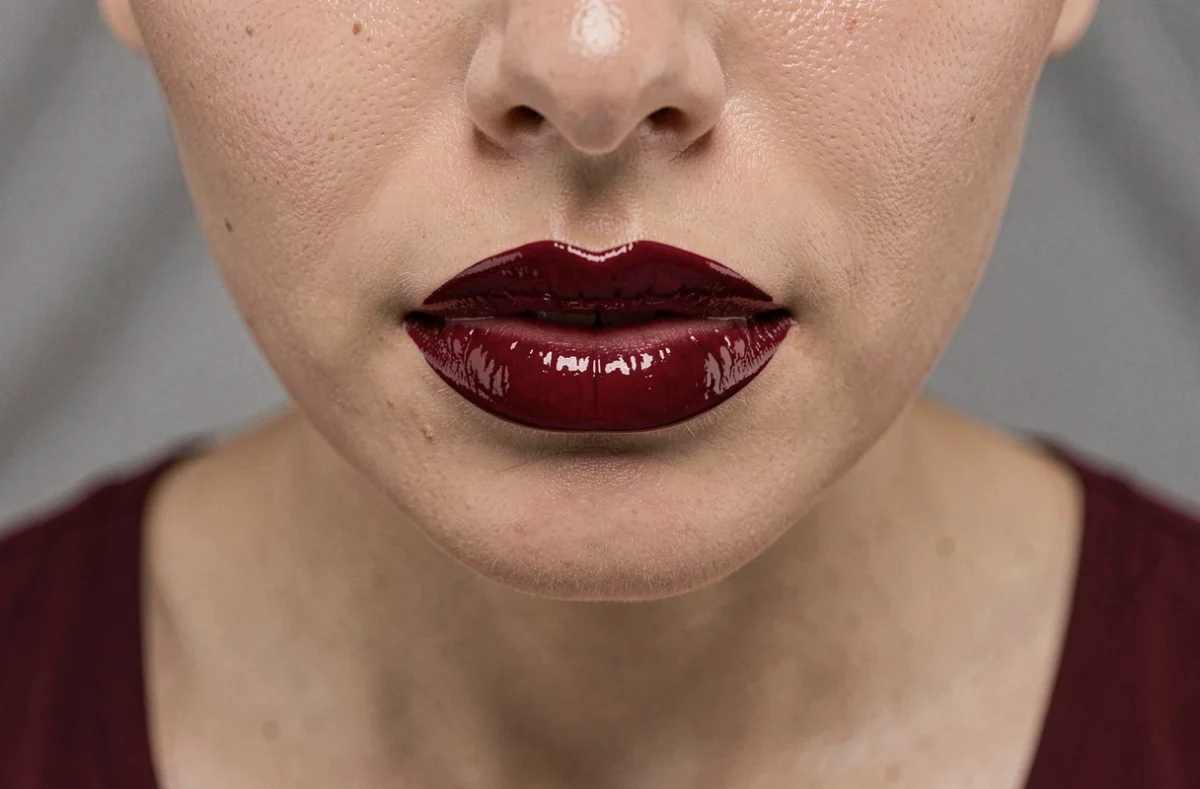
Longevity also differs. A transparent gloss migrates faster out of the application area because it is often more fluid. A tinted gloss, formulated with more adhesive resins, lasts longer but sometimes leaves a noticeable sticky residue. The compromise lies between comfort and durability.
Hybrid Care-Makeup Formulas: Sustainable Trend or Marketing Argument
The segment of hybrid products (gloss enriched with hyaluronic acid, jojoba oil, or vitamin E) is progressing in the ranges of several brands. The idea of combining shine and hydration in a single step appeals to consumers looking to simplify their routine.
Field feedback on this point varies. A gloss that claims to have a moisturizing action deposits an occlusive film that temporarily limits water loss. The effect is mechanical, comparable to that of a balm. The presence of moisturizing actives in a formula worn for a few hours remains a limited contribution compared to a night treatment or a balm applied in a thick layer.
The real interest of these hybrid formulas lies in their texture. They are often less sticky than classic glosses, more comfortable on already dry lips, and compatible with prolonged wear without a sensation of tightness. The benefit is as much sensory as it is cosmetic.
- Tinted lip oils offer the best compromise between shine, comfort, and lightness for daily use
- Formulas enriched with plant waxes (candelilla, carnauba) hold better than those based solely on mineral oils
- A “plumping” gloss often contains menthol or pepper that causes local blood flow, not a real lasting volume gain
Gloss remains a makeup product whose primary function is aesthetic. Expecting it to replace a lip care product can lead to disappointment. Adopting it daily with an understanding of its composition and limitations allows for the best use, without expecting what it cannot offer.